Yellow Dock
(Rumex crispus)
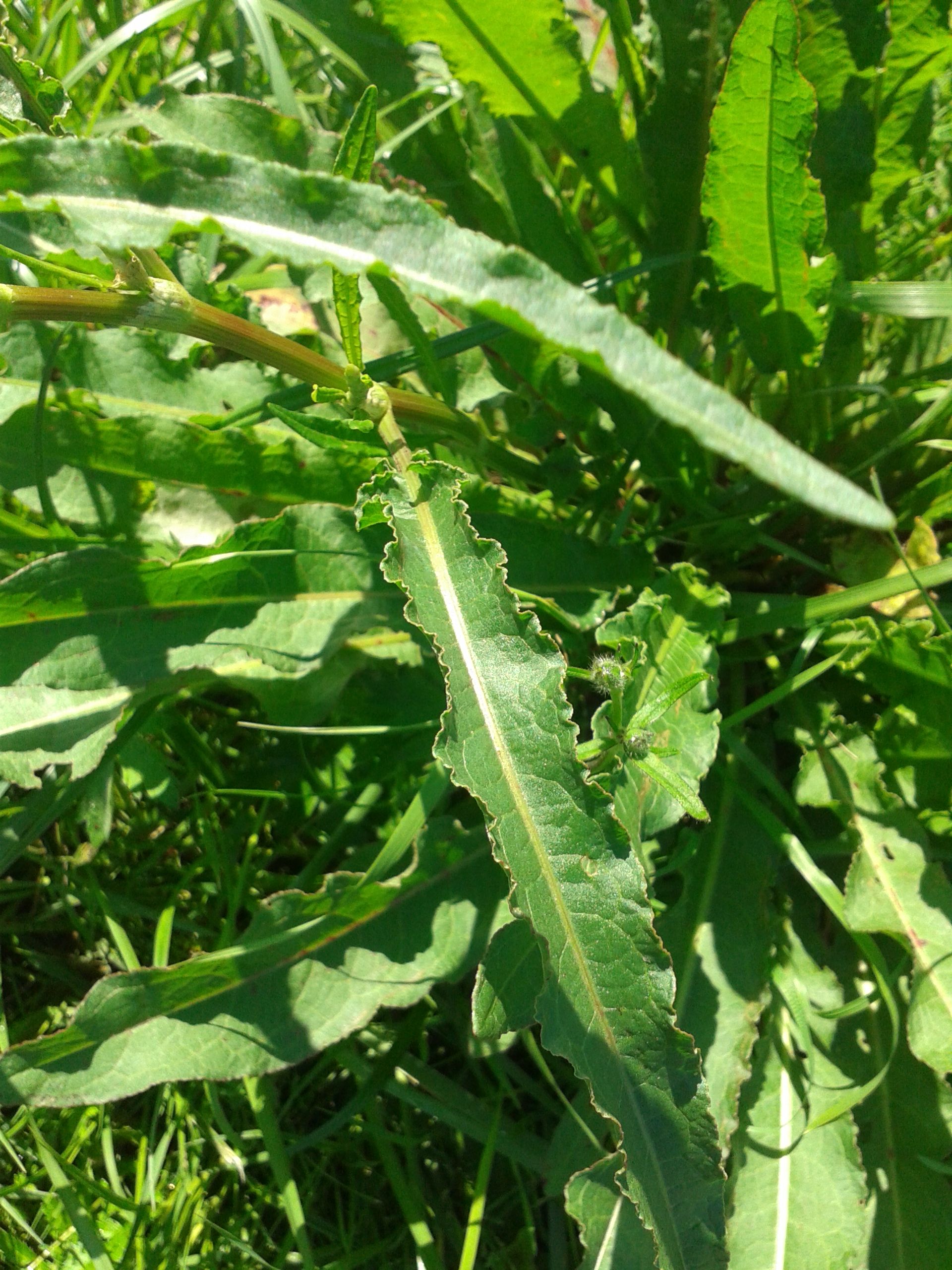
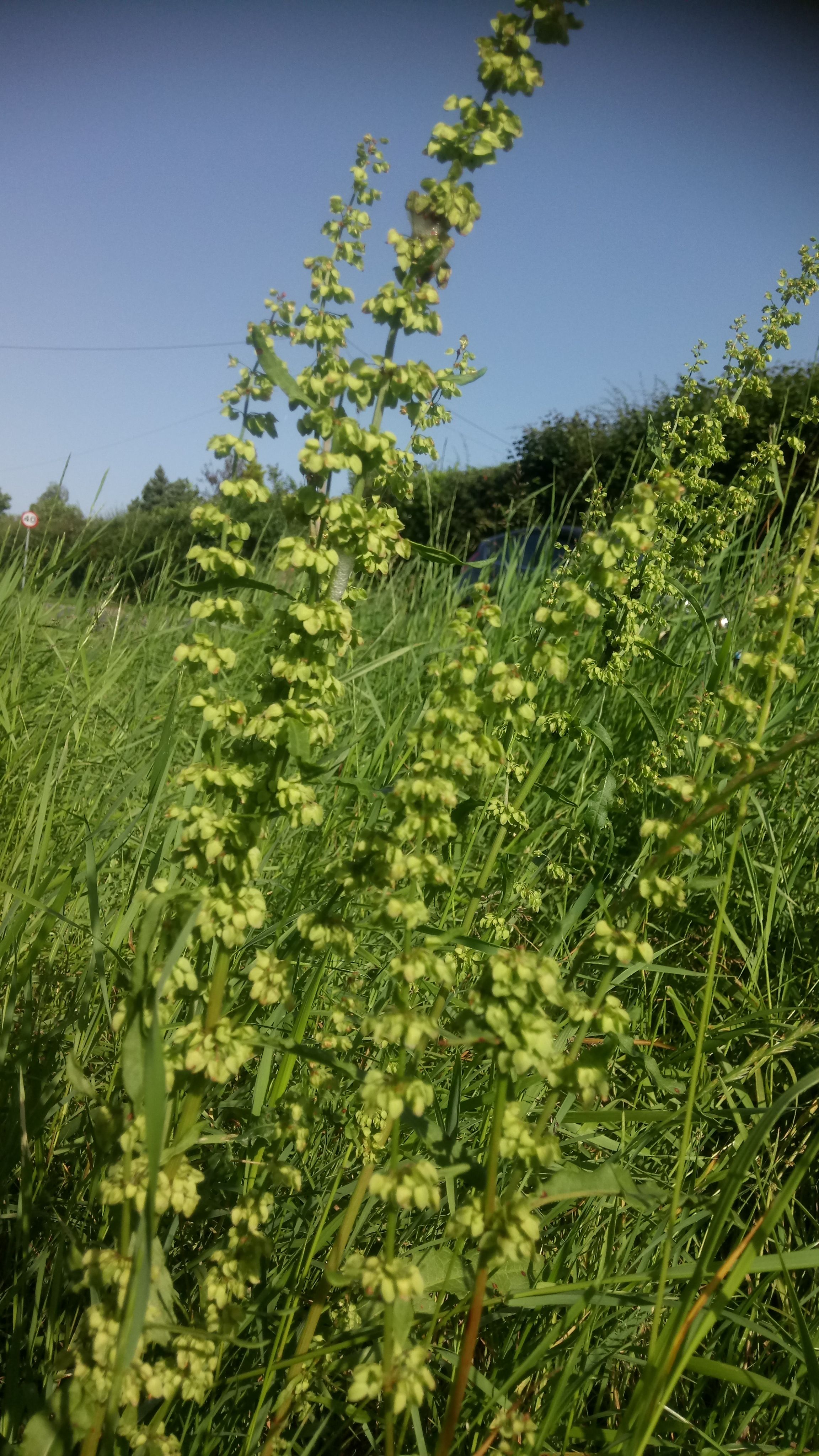
General Characteristics
Common names include yellow dock, curled dock, curly dock. Its older genus name before Rumex was Lapathum which derives from the Greek/Latin for 'opening the bowels of faeces', a clue to one of its uses! The common name 'Yellow dock' refers to the deep yellow colour of the root when cut open.
Yellow dock is a very common plant with a distinctive appearance which is quite different to the Common dock/Broad leaved dock. It is a perennial flowering plant with a large deep taproot belonging to the Polygonaceae family (knotweed or buckwheat family). It is a native of the UK, Europe, Western Asia and parts of Africa and is naturalised across the USA and Canada. The root becomes a large cluster of taproots as the plant matures over the years.
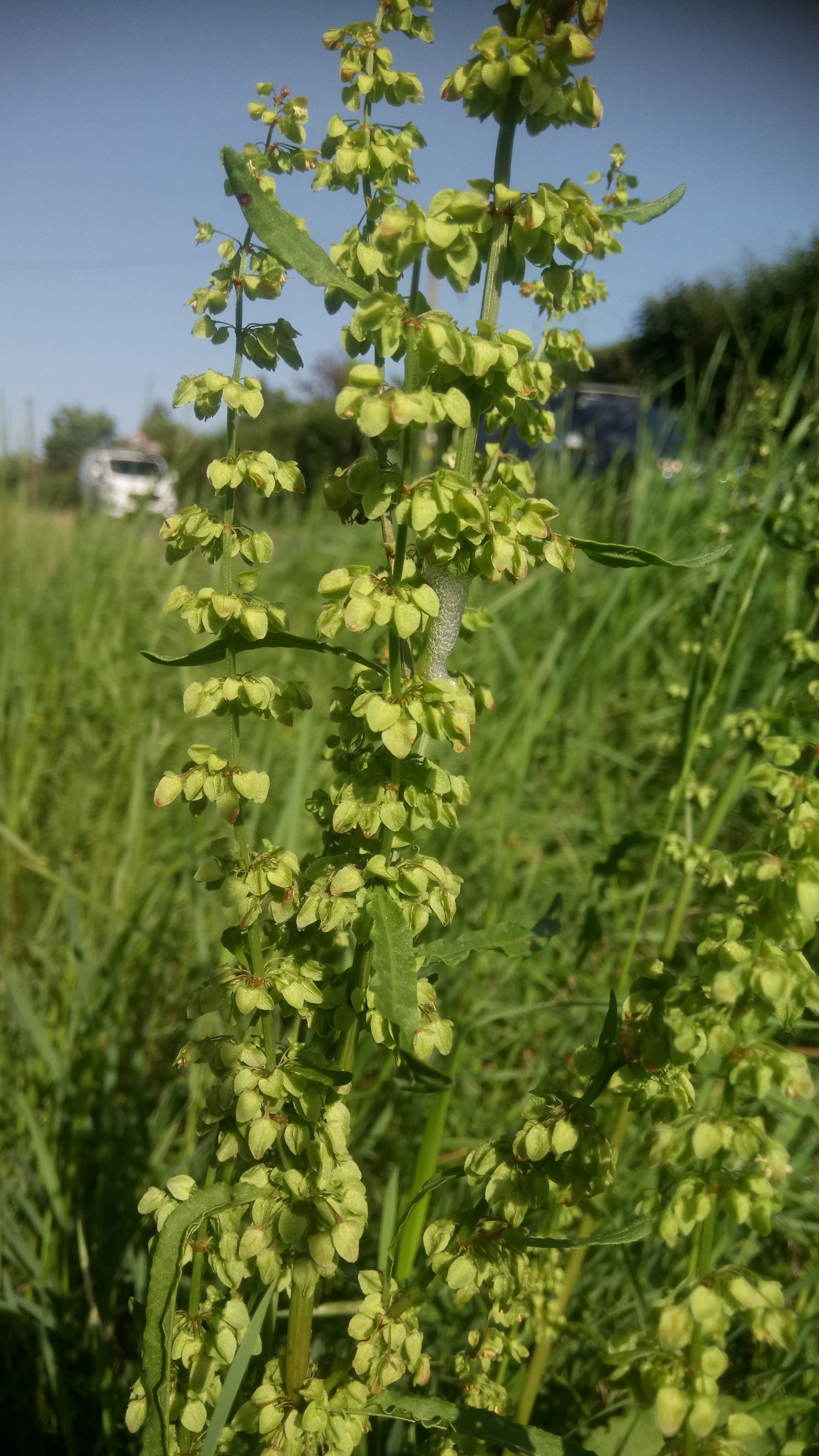
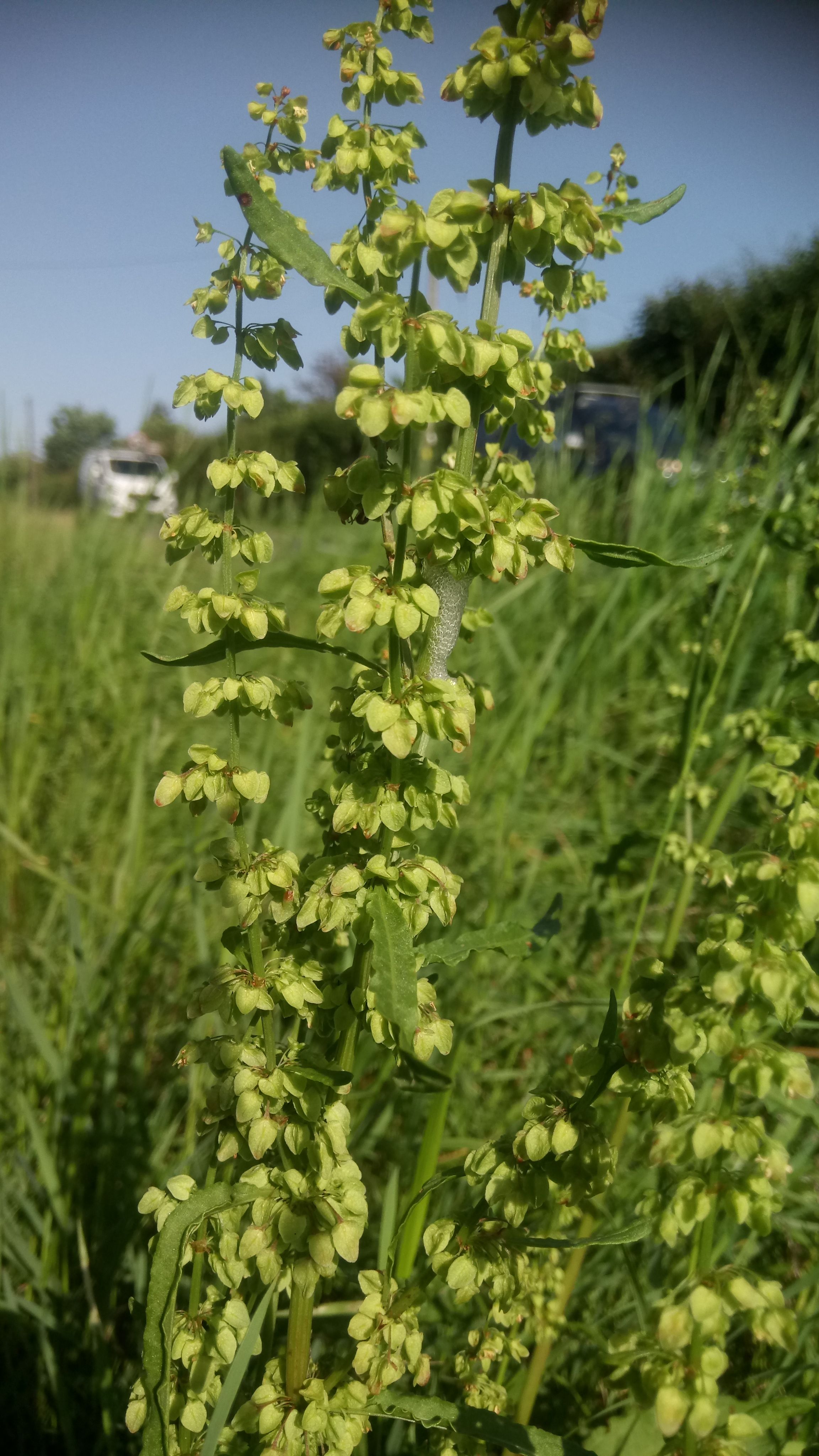
The leaves arise from a basal rosette with a tall stiff, ribbed flowering stalk reaching up to 1. 5 metres high. Leaves are long and thin with distinct curly leaf edges. The more common broad leaved dock has much wider leaves with no curled edges. The flowers are produced along the length of the stalk in small clusters on branching stems and are yellowish green in colour, turning to rusty red in late summer/autumn. Old flower stalks often survive above ground over winter and provide a useful marker for spring foraging.
The plant produces copious amount of seed which can make it difficult to eradicate once it has take hold of of an area of land.
They will tolerate most types of soil as long as it is free draining, they prefer not to sit in wet soil but have been known to survive up to 8 weeks submerged in water from seasonal flooding etc. Most commonly seen in grass and waste ground in a sunny position, damp verges and is a common plant of arable or grazing field margins.
Organic Yellow dock root dried herb and tincture are available to buy in our herbal shop.
Harvesting and Preparation
For medicinal purposes, the root is the part we need to harvest. This is best done in either early spring just before the leaves begin to grow up or in late autumn when the aerial parts are looking pretty much dead. Be mindful of their deep roots and their ability to pull in metals and other contaminants when harvesting, choose your ground wisely and avoid sites where you know or feel the soil is contaminated with heavy metals etc.
The very young tender leaves and stalks of the newly emerging spring plant can be eaten like spinach but be aware that like its relative Sorrel, these plants contain oxalic acid which should'nt be consumed in large quantities. It can be harvested all through the winter however if ground conditions allow. Like most roots, its best not to harvest the root if the plant is actively growing as this will take away some of the medicinal and nutritional properties of the root. The larger leaves of common or broadleaf dock were once used (and still can be) for wrapping butter to preserve it. The Sami people of Northern Europe use the leaves as a substitute for rennet to curdle milk and make cheese.
The seeds are also edible and can be used like any other seed, either ground into a powder and used as a flour or eaten as a whole or crushed seed added to recipes etc. Some prefer to separate the seed from the cases (chaff), others use the whole seed and chaff together. These tend to be available all through the winter and can make a useful survival food. They can vary widely in taste so have a nibble before committing to using in recipes.
Organic Yellow dock root dried herb and tincture are available to buy in our herbal shop.
Therapeutic Actions and Uses
Yellow dock has a long tradition of use as a medicinal plant used as an iron tonic, blood cleanser and general cleanser of the whole body, particularly the digestive system, lymphatic system and for chronic skin conditions.
The roots energetics are somewhat cooling and relaxing, its clears excess heat and congestion. This makes it applicable to hot conditions such as hot flushes and fevers.
It has a mild sour and also bitter taste. It encourages a downward movement, down and out of the body or organ and improves all round circulation of blood and fluids.
Yellow dock has an excellent reputation as a first class alterative, a herb that gently encourages the proper functioning of all systems and organs. It usually does this by opening and cleansing organs and the blood vessels of the eliminatory organs, the lymphatic, digestive, urinary system and the secreting glands of the skin. The old fashioned term for an alterative herb is a 'blood cleanser'.
It is a classic herb for moving anything in the body that is 'stuck'. Has been used for swollen glands, swollen lymph nodes, tonsils etc.
It has a mild astringent action on the internal tissues which leads to its reputation for alleviating diarrhoea and conditions like dysentery. It could be classed as a digestive tonic, capable of slowing down excess fluid like bowel movements yet also relaxing the bowel enough to allow complete emptying and encouraging proper bowel movements in chronic constipation.
Used in mild or chronic constipation, especially incomplete emptying of the bowel or straining and/or haemorrhoids are present. Its not a laxative as such but it does encourage the complete emptying of the bowel via its anthroquinones and its astringency.
It can be very useful for acid reflux, oesophagitis and excess stomach acid secretions. Other species of dock have been studied for both their ulcer prevention and curative powers. Further along the digestive tract it can be helpful in enteritis, colitis, IBS, diverticulitis, celiac disease, leaky gut and Crohns disease. It is also helps prevent bleeding in the GI tract.
At the other end of the GI tract, Yellow dock root tea can be used as a gargle for mouth ulcers and a general soreness in the mucosa of the mouth, including thrush and lichen planus. When the breath is bad from incomplete or slow digestion, yellow dock can be used. The tea makes a good mouthwash for general gum health.
The roots have the ability to draw iron form the ground. In generations past, folk healers were known to sprinkle iron filings around the Yellow dock plant to enrich the roots further. Their iron content makes them suitable in simple iron deficiency anaemia and as a general blood tonic. If iron is low then Yellow dock will also help with the resulting tiredness and fatigue.
The roots also have a positive tonic action on the spleen where old red blood cells are broken down, iron is recycled and a reserve of blood is held in the body.
Yellow dock root would be a useful part of a formula aimed at cleansing and decongesting the liver and for stimulating the gallbladder to release its juices. For this reason, it makes a great addition to detoxing formulas. Use in formulas for jaundice.
It also has an anti-parasitic action against worms and other parasites, even conditions like malaria, thrush, candida, scabies. Many older herbals mention syphilis and gonorrhoea too and other gynaecological diseases.
Skin conditions such as psoriasis, eczema, impetigo and dermatitis can all be helped with persistent use of Yellow dock. Itchy skin conditions, shingles, boils, acne, cysts and abscesses and blood poisoning can also benefit from the cleansing action of the root. Components in the root also contain a sunscreen like component and are being investigated for treatments for anti-ageing of the skin.
It can also be useful in formulas for fibroids and as a wash for the cervix in case of precancerous or cancerous cells being detected, alongside herb robert.
Rheumatism and arthritis where toxic accumulations and congestion are present.
Yellow dock root could also prove useful for improving bone density and osteoporosis as it prevents bone loss. Link here.
This pubmed article has a summary of the medicinal effects of Yellow dock ......The crude extracts and isolates of R. crispus exhibit anti-tumor, antimicrobial, antioxidant, anti-inflammatory, anti-osteoporotic, anti-diabetic, anti-allergic, and other activities.
Another pubmed abstract detailing the anti-cancer actions of yellow dock root can be found here.
This article details how Yellow dock root can be useful for preventing adhesions and fibrosis and acting as an effective anti-inflammatory following internal surgeries.
Yellow dock root has also been found to contain substances which are acetylcholinesterase inhibitors - substances which are used against Alzheimers and Parkinsons, amongst many other uses. Link here.
On a more esoteric note, many use Yellow dock root in their spiritual practise, it is said to help the emotional/mental bodies to gently purge also, allowing the release of stuck emotions or feelings, letting go of the past or previous traumas. Particularly useful during transitional periods of ones life.
Dosage and Cautions
* Caution during pregnancy (laxative action) though traditionally used as an iron tonic, I prefer nettle tea for this. Use caution if breast feeding also due to its laxative action.
* May cause allergic reaction in rare cases, especially in those allergic to ragwort and similar. Overuse can cause upset tummy and skin irritation.
* Use with caution in cases of kidney stones.
* Considered a safe herb when used at correct dosage.
* Best used as part of a herbal formula.
* Avoid consuming tannin rich herbs or foods (black tea etc) if using Yellow dock as an iron source as tannins inhibit iron absorption.
* Often combined with Burdock root and Dandelion root Dandelion root as an excellent all round tonic and alterative (gently encourages all bodily systems back into balance and health).
**Adult**
Dried herb: 1-2 teaspoons of dried root, add to a pan with just over a mug full of water and bring to the boil. Simmer for around 15 minutes, strain and drink. Up to 3 cups daily.
Tincture: 2ml -5ml up to 3 times daily.
**Children**
Add 12 to the child’s age. Divide the child’s age by the total.
Eg. dosage for a 4 year old .... 4 {age} divided by 16 {age + 12} = . 25 or 1/4 of the adult dosage.